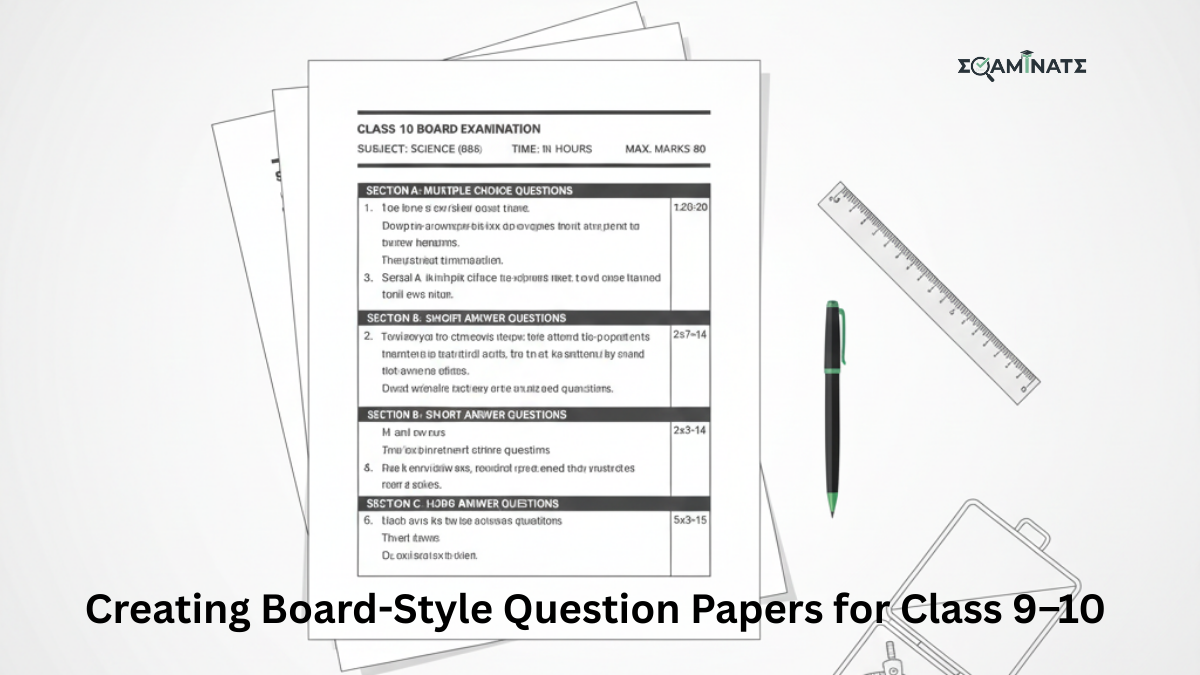
Board-style question papers are essential for preparing students for final exams. For Classes 9 and 10, exams must follow a clear structure and syllabus pattern. Teachers need to ensure that papers reflect board standards, helping students build confidence and readiness for the real examination.
What Are Board-Style Question Papers?
Board-style question papers follow the official examination format. They are designed according to the board syllabus and marking scheme. These papers include a balanced mix of question types and are intended to test understanding rather than rote memorization.
Importance of Board-Style Papers for Class 9–10
Classes 9 and 10 lay the foundation for board exams. Board-style question papers:
-
Familiarize students with exam patterns
-
Teach time and marks management
-
Reduce exam anxiety
-
Build confidence and readiness for final exams
Key Elements of a Board-Style Question Paper
A typical board-style paper includes:
-
Sections with clear marks distribution
-
Detailed instructions for students
-
Questions aligned with chapters and learning outcomes
-
A balance of difficulty levels
This structure ensures fairness and tests a range of skills.
Creating Board-Style Papers Using Examinate
Examinate allows teachers to create board-style question papers efficiently. The platform helps teachers:
-
Select class, subject, and syllabus
-
Organize questions according to board-aligned formats
-
Save time on manual preparation
-
Ensure accurate and professional papers
Question Types Used in Board-Style Papers
Board-style papers typically include:
-
Objective questions (MCQs, True/False)
-
Short answer questions
-
Long answer/descriptive questions
Each question type evaluates different skills, and Examinate helps maintain a balanced question distribution.
Maintaining Syllabus Alignment
Syllabus alignment is critical for board-style exams. Out-of-course questions confuse students and reduce fairness. Examinate supports syllabus-based question selection, ensuring that all questions remain within the intended scope.
Benefits for Teachers
Teachers benefit from using Examinate because it:
-
Saves time on exam preparation
-
Reduces manual formatting errors
-
Maintains consistency across multiple papers
-
Makes long-term exam planning easier
Benefits for Students
Students also benefit from board-style papers:
-
Early exposure to board patterns
-
Practice in time management
-
Familiarity with marks allocation and question types
-
Improved performance in final exams
Conclusion
Creating board-style question papers for Classes 9–10 is essential for effective student preparation. Examinate simplifies this process for teachers, ensuring proper syllabus alignment, balanced structure, and professional-quality papers. This supports both educators and students, making exam preparation more efficient and effective.
Frequently Asked Questions (FAQs)
1. What makes a question paper “board-style”?
Board-style papers follow official exam formats, include marks distribution, and test understanding rather than memorization.
2. Can Examinate create papers for Class 9–10 efficiently?
Yes, Examinate allows teachers to quickly generate board-aligned question papers with minimal manual effort.
3. Does Examinate maintain syllabus alignment?
Absolutely, the platform ensures that all questions stay within the syllabus and follow the proper curriculum.
4. What types of questions can I include in a board-style paper?
Teachers can include objective, short-answer, and long-answer questions to evaluate different skills.
5. How does using Examinate benefit students?
Students gain early exposure to board patterns, improve time management, and become familiar with marking schemes, boosting their final exam performance.